Author: megagen
Anyridge video features 3
Anyridge video features 2
Anyridge video features 1
A strong connection is essential to prevent failure due to movement and bacteria
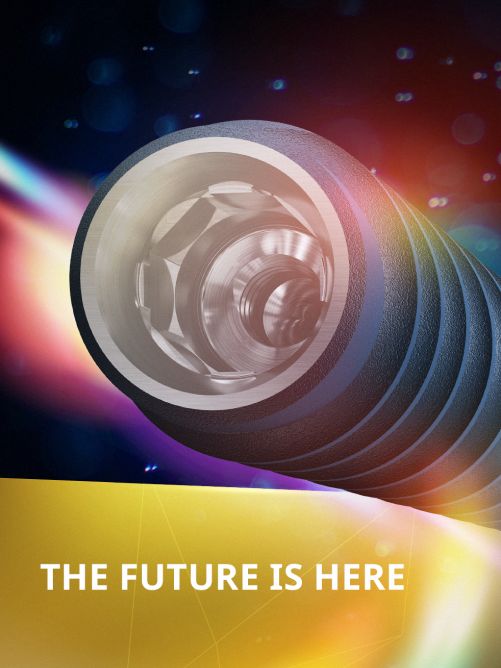
AnyRidge: unique Magic 5° connection gives a perfect hermetic seal
BLUEDIAMOND: unique X-FIT gives greater joint stability.

Thread-less upper section of the fixture & an anatomical S-line prosthetic
Preservation of an excellent emergence profile for a healthy and aesthetic gingiva.

Preserve the jumping distance for optimal bone remodeling
KnifeThread design facilitates effective bone remodeling with a proper blood supply around the implant, it is crucial to ensure adequate space.

Implant Design
Implant positioning can be achieved with minimal bone destruction and a reduced drilling protocol by using a narrow core and deep knife thread. The wide knife thread engages well with the remaining natural bone, providing sufficient initial stability in various shapes of extraction sockets.

ISQ Values
Mean ISQ values in different bone densities over time revealed a minimal drop at three weeks in the D1, D2, and D3 classes, while no significant differences were observed over time in the D4 group (p = 0.07). Thirty-nine out of forty implants presented ISQ values above 70, placing them within a “comfort zone” suitable for early or immediate loading.
Following implant placement, a completely different ISQ pattern was observed. Instead of decreasing at 3–4 weeks, the ISQ values continuously increased. The unique thread design minimizes pressure on the bone during fixture insertion, addressing the previously challenging issue of reduced initial stability during the 3–4 weeks post-implantation. This advancement significantly enhances the potential for immediate and early loading.

MegaGen Implant Insertion Torque Values
This study showed that matching implant geometry to bone type may help control ITV in most cases, leading to a “comfort zone” where optimal primary implant stability can be achieved across all bone types.
Additionally, high ITV does not appear to affect marginal bone levels when using this specific implant design. However, to prevent mechanical issues caused by extremely high ITV, it is essential to place the implant according to the recommended drilling sequence tailored to the bone quality.