 CALL US
2-day hands on practice 14 hours verifiable CPD
PROGRAMME
Day 1. Delayed Implants & Vertical Soft-Tissue Enhancement
I. Crestal Bone Stability & Soft-Tissue Influence
- Development of crestal bone stability through surgical concepts
- Impact of vertical soft tissue on crestal bone preservation
- Platform switching: does it truly protect bone?
- Influence of implant placement depth
- Importance of implant–abutment connection stability
- Bone remineralisation & corticalisation in thick tissues
- Soft-Tissue Thickness
II. Four Novel Methods to Increase Vertical
- a) Subcrestal implant placement
- b) Flattening of the alveolar bone
- c) “Tent Pole” technique
- d) Vertical soft-tissue thickening
HANDS-ON
III. Vertical Soft-Tissue Augmentation
1. Practice on pig jaws of vertical soft tissue augmentation with membranes
- Incision design
- Blunt flap release for tension reduction
- Preparation of allogenic membranes
- Membrane positioning
- Matrix-suture stabilisation
2. Techniques performed:
- Subcrestal implant placement
- Tent pole method
- Alveolar bone flattening
- Vertical soft-tissue thickening
ADDITIONAL HANDS-ON
1. Soft tissue profile creation with individual healing abutment
Day 2. Immediate Implants & Implant Prosthetics
I. Immediate Implants
- Rationale for immediate implant placement: benefits and risks
- Why immediate implants can fail—and how to prevent it
- Biological success factors
- Osseointegration
- Emergence profile
- Peri-implant tissue response
- Achieving primary stability & controlling crestal bone levels
Case-Specific Protocols
- Immediate molars (Types A, B, C):
- Implant depth
- Bone grafting
- Stability
- Healing abutments
- Soft-tissue grafting
- Immediate premolars
- Immediate anterior implants
- Complications and how to avoid them
HANDS-ON
I. Immediate Implant Placement Practice with models
- Extraction socket evaluation
- Elimination of thin septum
- Determining implant diameter & thread width
- Implant placement in molars & premolars when standard apico-coronal positioning is not possible
- Fabrication of individual healing abutments
II. Implant Prosthetics
- How to control cement remnants after cementation
- Supragingival margins & custom abutments
- Relationship between cement and peri-implant disease
- Screw-retained restorations vs. cement-retained
- Use of Ti-bases in restorations
- Best cements for Ti-bases
Prosthetic Materials
- Subgingival: zirconia, titanium, ceramics—pros & cons
- Use of ultra-polished zirconia
- Peri-implant soft-tissue composition
- Supragingival materials (ceramics, e.max, monolithic zirconia): indications and selection
HANDS-ON
Advanced Impression Technique
1. Implementation of Prof. Linkevičius’s special impression method for deeply positioned implants
2. Stabilisation of the transfer using occlusal registration materials
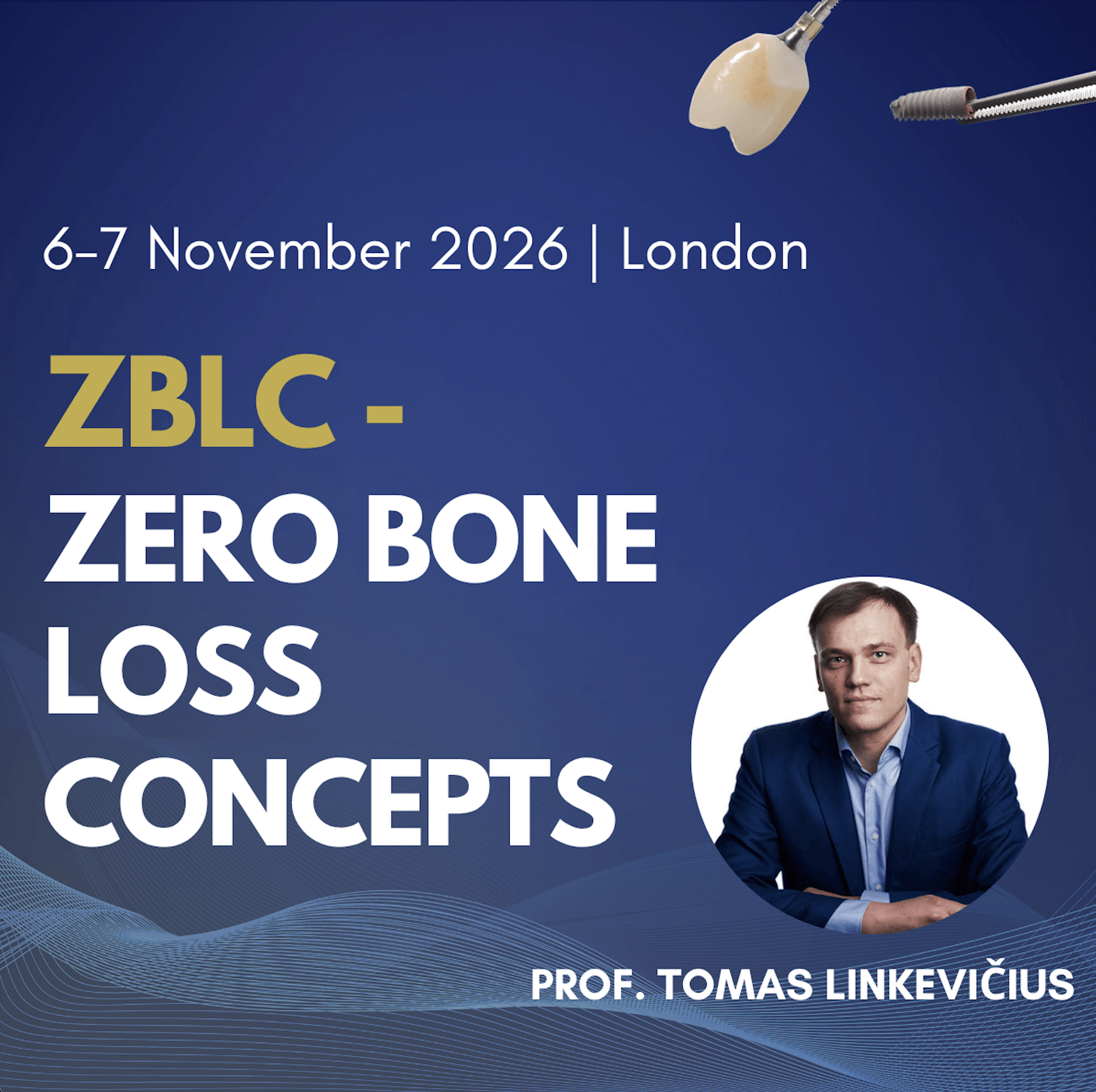
Tomas Linkevičius is an Associate Professor at Institute of Odontology, Vilnius University in Lithuania. Also he serves as Visiting Professor in Ghent University, Belgium. He received a dental degree in Kaunas Medical University in 2000. In 2004 he completed the post-graduate studies in prosthodontics in Vilnius University. In 2009 he finished his PhD doctoral dissertation and defended it in Riga Stradins University in Latvia. Tomas Linkevicius is an author
of many publications in international peer-reviewed journals and focuses his research on soft tissues and cementation of implant restorations. He also lectures internationally and is an active member of European Academy of Osseointegration (EAO) and Academy of Osseointegration (AO). Tomas Linkevicius holds a specialist prosthodontics and implant dentistry practice and a private dental research facility.